

Search Website
Balakrishnan Distinguished Lecture in Population Dynamics and Inequality
U.S. states and population health: What do we know and where do we go from here
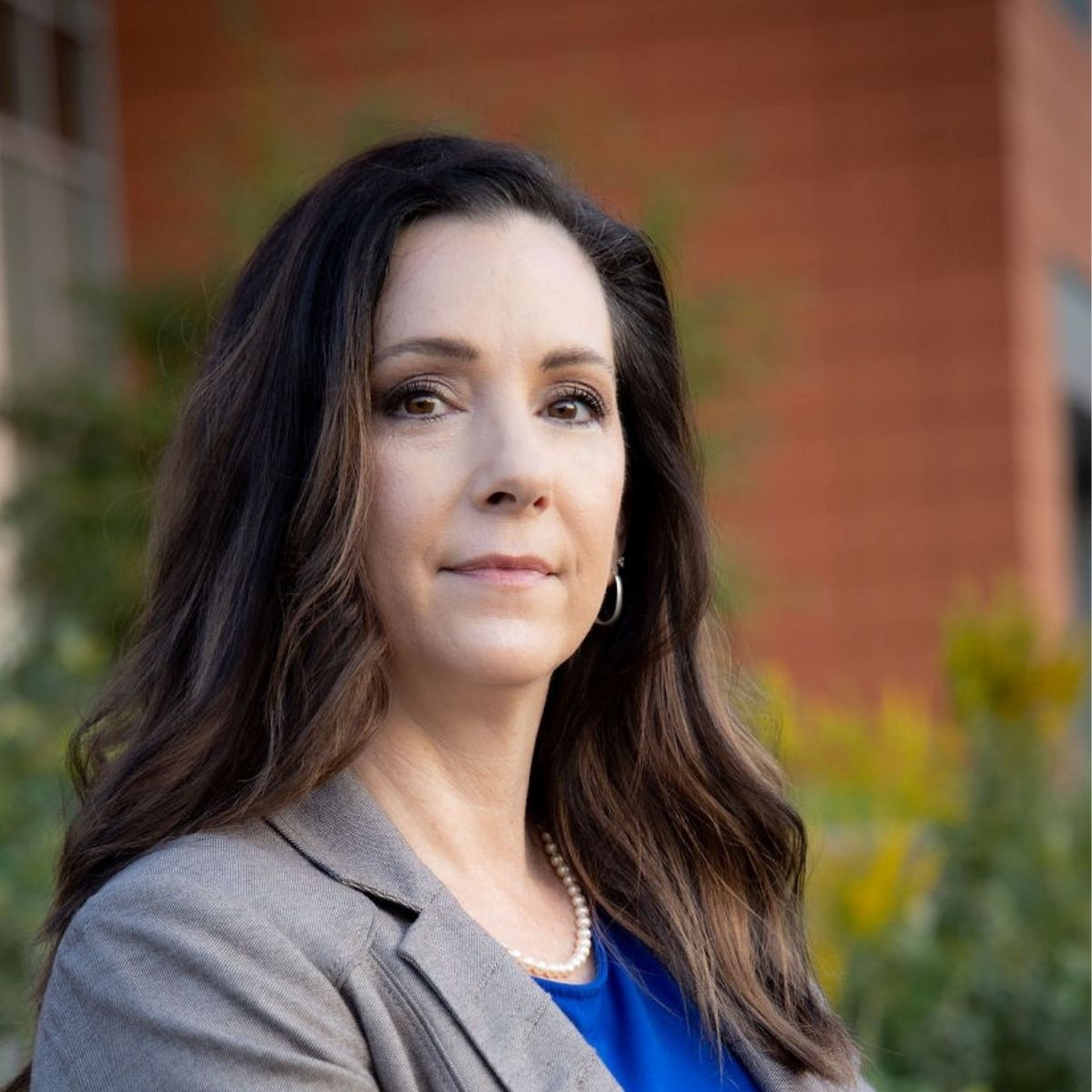
Jennifer Karas Montez (Syracuse University)
3:00pm-4:00pm
Thursday, October 22nd, 2026
Weldon Community Room
Jennifer Karas Montez is a University Professor of Sociology and the Gerald B. Cramer Faculty Scholar in Aging Studies at Syracuse University. Her research examines the troubling trends in mortality rates in the United States since the 1980s and investigates why the trends are most worrisome for adults without a bachelor’s degree and those living in certain areas of the country. Her collaborative work has built the case that the hyper-polarization in U.S. states’ policy contexts since the 1980s has had an adverse impact on population health and mortality. Montez is currently the president of the Interdisciplinary Association for Population Health Science and Editor of the Journal of Health and Social Behavior. She earned a PhD in Sociology with a Demography specialization from the University of Texas at Austin.
Established in 2016, the goal of the Balakrishnan Distinguished Lecture in Population Dynamics and Inequality, to enhance the excellence in the Department of Sociology in Population Dynamics and Inequality and to give visibility for the University in this area in the academic world. The lecture series is made possible due to the support of Professor Emeritus T.R. Balakrishnan and Lois F. Leatham.
Past Lectures
Ashton Verdery
3:00pm-4:00pm
Thursday, October 23rd, 2025
Weldon Community Room
Dr. Ashton Verdery is a Professor of Sociology, Demography, & Social Data Analytics in the Department of Sociology and Criminology and a co-funded faculty member of the Institute for Computational and Data Sciences at The Pennsylvania State University. He is the Founding Director of Penn State’s Social Science Population Aging Research Center (SSPARC) and an Associate Director of the Population Research Institute. Dr. Verdery obtained a B.A. in Sociology from McGill University and a M.A. and Ph.D. in Sociology from the University of North Carolina at Chapel Hill. He researches and teaches about cross-national demographic and family changes linked to individual and population health, emphasizing novel computational and mathematical methods to sample hard-to-survey groups, model kinship networks, and understand the nexus between social relationships and health.
Abstract
A central component of the demographic perspective is the unity between individual experiences and population dynamics. Fertility not only transforms a parent's life, it also reshapes families and implicates population growth, and there are robust literatures that explore it within and across each of these dimensions. The literature on mortality, however, is not as robustly connected. There is strong attention to individual deaths, such as what predicts them, and clear knowledge about mortality's impacts on population dynamics, but there is less consideration of the social reverberations of death, particularly the losses experienced by the living and how these shape individuals' trajectories. This lecture advances bereavement as a key demographic lens: a way of seeing how kinship structures, mortality regimes, and social inequalities shape who experiences loss, when, and with what consequences. I will highlight three areas of recent research. First, I show how formal and computational demographic models can quantify lifetime exposures to kin loss across cohorts, races, and geographies, revealing stark inequalities in who bears the burdens of early and repeated bereavement. Second, I demonstrate how bereavement cascades into health and social outcomes, from depression to educational disruption and dementia, with implications for aging societies. Third, I argue that bereavement is not merely an individual experience but a population process, one that illuminates the interdependence of lives across generations and connections between the micro-, meso-, and macro-levels. Throughout, I reflect on limits in our current capacity to understand the social demography of bereavement. By reframing bereavement as a vital demographic object of study, we can better understand the social organization of loss and its role in shaping population health and inequality in the 21st century.
How Early Life War Trauma Can Impact on Later Life Health: A Focus on Aging in Vietnam
Zachary Zimmer
3:00pm - 4:00pm
Friday, November 1st, 2024
Location - Thames Hall Atrium
Zachary Zimmer received a PhD in Sociology with a concentration on Population Studies in 1998 from the University of Michigan. Since then, he held positions at a number of universities and scholarly organizations including the University of Nevada Las-Vegas, The Population Council, The University of Utah, and The University of California San Francisco. In 2016 Zimmer was awarded a Tier 1 Canada Research Chair, which he now holds at Mount Saint Vincent University in Halifax, where he is Professor in the Department of Family Studies and Gerontology and Director of the Global Aging and Community Initiative. His research applies global demographic perspectives to concerns of health and wellness of older persons worldwide. Dr. Zimmer has investigated an eclectic range of topics related to global aging, with recent endeavors including investigating religiosity and spirituality among older adults, effects of early-life wartime trauma on later-life health, trends in chronic pain, and intergenerational relationships in societies undergoing rapid socio-demographic change. He has published over 120 articles in journals that cross disciplines, such as gerontology, sociology, demography, public health, medicine, and epidemiology.
Abstract:
Evidence about the importance of early life experiences for later life health continues to grow. However, in many ways, the impact of war as an early life experience is understudied. This represents an oversight given the enormous health challenges that result from the aftermath of war trauma, and that war punctuates the lives of so many around the world that are moving into older ages, with numbers increasing. The Vietnam Health and Aging Study (VHAS), launched six years ago, is designed specifically to collect data that allows an empirical connection between varying levels of war trauma and later life health. First touching on how common is the experience of war among older persons, the lecture will then focus specifically on survivors of the Vietnam War, 1965 to 1975, providing a look at what the VHAS study has thus far been able to reveal with respect to the long-term impact of wartime trauma on health and aging.
3:00pm - 4:00pm
Thursday, September 28th, 2023
Weldon Library Community Room
Shelley Clark is a James McGill Professor of Sociology at McGill University. Clark’s work examines family change, health and wellbeing, and life course transitions in North America and sub-Saharan Africa. Her current recent agenda focuses on the wellbeing of children, youth, and families in rural Canada and the U.S. She was the founding Director of the Centre on Population Dynamics at McGill. She has also served on the boards of the Population Association of America and the Canadian Population Society and is currently a Council Member of the International Union for the Scientific Study of Population.
Abstract
Rural families often evoke nostalgic images of close-knit nuclear households consisting of married parents and many children. This image runs counter to sweeping family changes, such as very low fertility and rising single parenthood and cohabitation, that characterize the Second Demographic Transition. Whether rural families have retained their more traditional family forms in the midst of the Second Demographic Transition is largely unknown. This talk will examine how family structures, union formation, and fertility in rural and urban areas in Canada and the U.S. have changed over the last 30 years and investigate what is driving these changes. Our results show rapidly rising rates of cohabitation and nonmarital childbirth along with sustained elevated fertility among rural families. These surprising trends have important implications for the nearly one-fifth of rural Canadians and Americans as well as for the long-term demographic futures of each country.
3:00pm - 4:00pm
Thursday, September 29th, 2022
University College 3110 (Conron Hall)
Professor Sampson’s lecture will feature a long-term study of multiple cohorts of children from Chicago who came of age during the transformation of crime and punishment in the last quarter-century. His results reveal the power of social change and the limits of theories focusing on individual traits and early-life experiences, contributing to a new understanding of cohort inequalities during the era of mass incarceration and the great American crime decline.
A lecture by Robert J. Sampson Robert J. Sampson
Robert J. Sampson is Henry Ford II Professor of the Social Sciences at Harvard University. He is an elected member of the National Academy of Sciences and a Fellow of the American Academy of Arts and Sciences, the American Society of Criminology, and the American Philosophical Society. He is the author of three award-winning books and numerous articles. Sampson’s last book, Great American City: Chicago and the Enduring Neighborhood Effect, is based on research from the Project on Human Development in Chicago Neighborhoods. He is currently conducting a follow-up study covering 25 years in the lives of study participants.
Young Adult Cohabitation: Redefining Relationships
Thursday, October 31, 2019
3:00 pm
Conron Hall, University College 3110
The family form is changing; the rate of marriage among young people in the United States is decreasing, with many people delaying marriage, or simply not marrying. Wendy Manning will examine Distinguished Professor of Sociology and the Dr. Howard E. and Penny Daum Aldrich Distinguished Professor at Bowling Green State University.
A lecture by Dr. Wendy Manning
Dr. Manning served as the President of PAA in 2018; she currently serves as Director of the Center for Family and Demographic Research and Co-Director for the National Center for Family & Marriage Research. She is a family demographer; her research examines how family members define and understand their obligations to each other in an era of increasingly diverse and complex family relationships.
the trends and patterns of cohabitation among young people, aged 18 to 29, and what impact these trends have on their psychological and economic health.
Where Does the Gender Revolution Stand?
3:00-4:00pm
Monday Oct. 22, 2018
University College 3110 (Conron Hall)
A lecture by Dr. Paula England
Paula England is a Silver Professor of Sociology at NYU New York and an affiliated faculty member at NYUAD. England’s research has focused on gender inequality at work and at home; she has written on the sex gap in pay, occupational segregation, how couples divide housework, factors leading to divorce, and the wage penalty for motherhood. She has also examined social class differences in family and childbearing patterns. She was elected in 2018 to the National Academy of Sciences.
Dr. England will examine trends in a number of key indicators of gender inequality — including employment, earnings, and segregation of fields of study. She considers which aspects of gender inequality have changed more and which are more resistant to change. She also points out the asymmetry of change in gender — with more change in women’s than men’s roles.
Occupational and Income Mobility in the USA, 1994-2016: Demography Counters Inequality
Thursday, Nov. 2, 2017
2:00-4:00 pm
University Community Centre 290 (McKellar Room)
Reception to follow
A lecture by Dr. Michael Hout
Professor of Sociology at the New York University. Hout uses demographic methods to study social change in inequality, religion, and politics. He is co-principal investigator on the General Social Survey (GSS), a long-running NSF project. His current work uses the GSS to study changing occupational hierarchies and social mobility since 1972.
Segregation and the Perpetuation of Poverty
Thursday, December 1st, 2016
2:30pm-4:00pm
McKellar Room, University Community Centre
A lecture by Dr. Douglas Massey
Professor of Sociology at the Woodrow Wilson School of Public and International Affairs at Princeton University President of the American Academy of Political and Social Sciences and past-president of the American Sociological Association in and the Population Association of America.